
Picture a boardroom five years from now. The CFO is presenting quarterly numbers, legal is reviewing compliance obligations, and someone asks a question that changes the conversation: How long have we known our encryption was no longer sufficient?
The company might not have had a breach during that quarter. The damage could have started years before when encrypted files were taken and kept by an attacker who couldn’t read them at the time. Contracts, customer records, intellectual property and source code may have stayed safe for a while. If the encryption protecting those files weakens over time the sensitive information could be exposed long after the original theft happened
This is the premise behind harvest now, decrypted later, a threat model that has become an important consideration in enterprise security planning. Attackers can collect encrypted data today and attempt to decrypt it in the future when more capable computing technologies become available.
For CIOs, the implications extend well beyond cybersecurity. They touch technology architecture, data governance, vendor dependencies, regulatory obligations, and investment priorities. The question is no longer simply whether quantum computing will change encryption. It is whether enterprises are prepared to adapt before their most valuable data becomes exposed.
And AI is making that question more complicated.
The Risk Starts Before Q-Day
Quantum computing is often discussed as a distant technological breakthrough. But its potential impact on enterprise security is not limited to the day a sufficiently capable quantum computer becomes available.
Certain widely used public-key cryptographic systems are vulnerable to attacks from sufficiently powerful quantum computers. The exact timing of that capability remains uncertain. However, the information protected by those systems may need to remain confidential for years or decades.
Consider a company whose most sensitive intellectual property must remain confidential for ten years. If migrating its encryption infrastructure takes several years, the organization cannot afford to wait until quantum computing reaches a particular capability threshold before beginning its preparations.
The risk is not that every encrypted file will automatically become readable. The risk is that data requiring long-term confidentiality may be collected today and exposed later.
This creates a different kind of enterprise security challenge. Traditional security programs often focus on preventing, detecting, and responding to attacks within a defined operational window. Quantum-related risk introduces a longer horizon, where the value of information, the lifespan of encryption, and the time required to modernize technology all become part of the security equation.
For CIOs, that means treating cryptographic resilience as a long-term technology planning priority rather than a problem reserved for the future.
The Readiness Gap: Awareness Is Not Migration
Enterprise leaders are increasingly aware that quantum computing could challenge existing cryptographic protection. Yet awareness does not automatically translate into action.
The difficulty is partly organizational. Encryption rarely is managed by a system or team. Encryption is woven into places such as applications, databases, cloud platforms, identity systems, network infrastructure, connected devices and third‑party services. Some systems rely on libraries that are hard to update, and others depend on vendors whose migration schedules are outside of the enterprises’ direct control.
This creates a practical challenge: before an organization can migrate to quantum-resistant cryptography, it needs to understand where vulnerable cryptography is being used and which assets matter most.
A CIO therefore needs answers to several questions:
- Which systems use cryptographic algorithms that may become vulnerable to quantum attacks?
- Which business data must remain confidential for the longest period?
- Which applications, vendors, and infrastructure components depend on those systems?
- How quickly can cryptographic protections be updated without disrupting business operations?
- What investments are required to make the enterprise ready for future standards?
Without this visibility, quantum readiness risks becoming another technology initiative that is discussed extensively but progresses slowly.
AI Changes Both the Threat and the Response
Quantum computing and AI are often discussed separately. One challenges the foundations of certain cryptographic systems. The other is changing how businesses develop software, manage data, and operate technology.
Their intersection creates a broader security challenge.
AI can potentially help attackers identify vulnerabilities, automate reconnaissance, and scale certain attack activities. As AI capabilities evolve, security teams will need to assess how these tools affect the speed and sophistication of cyber threats.
At the same time, AI can support enterprise readiness. Organizations can use AI-assisted analysis to help classify sensitive data, identify cryptographic dependencies, map technology assets, and prioritize systems for migration. These capabilities do not replace security engineering or governance, but they can help teams manage the complexity of large technology environments.
The relationship is particularly important as enterprises build AI systems around proprietary data. Training datasets, model weights, enterprise knowledge bases, customer information and internal business logic can have long-term secrets. Keeping these things safe is not about protecting the AI application. It is about knowing every part of the data and infrastructure that helps the AI work.
The real question for CIOs is whether AI or quantum computing is more dangerous. It is how both of these technologies reshape the way companies keep information-built systems and handle their technology relationships.
What CIOs Need to Do Now
Quantum readiness does not require every organization to replace its entire encryption infrastructure immediately. It requires a structured approach to understanding exposure and preparing for change.
1. Build visibility into cryptographic dependencies
Organizations cannot protect what they cannot locate. A cryptographic inventory should identify where encryption is used across applications, infrastructure, data stores, devices, and third-party services.
This inventory should also capture algorithm dependencies, certificate lifecycles, key management practices, and systems that may be difficult to upgrade.
For CIOs, the objective is to establish a reliable view of where cryptography supports critical business operations.
2. Prioritize data based on confidentiality lifespan
Not all data carries the same long-term risk. A public document and a proprietary research dataset may require very different protection timelines.
Organizations should identify data that must remain confidential for years or decades, including intellectual property, sensitive customer information, strategic contracts, and regulated records. These assets should inform migration priorities alongside business criticality and technical complexity.
This approach turns quantum readiness from a broad technology concern into a risk-based investment decision.
3. Make cryptographic agility part of architecture
Cryptographic agility is the ability to update or replace cryptographic algorithms and related components without extensive redesign or operational disruption.
For CIOs, this is an architectural capability, not merely a security feature. Systems designed with modular cryptographic components, manageable dependencies, and upgradeable infrastructure can adapt more easily as standards and threats evolve.
New technology investments should therefore consider how easily their security mechanisms can be updated over time.
4. Evaluate vendors and technology partners
Enterprise readiness depends partly on the readiness of the technology ecosystem.
Cloud providers, software vendors, hardware manufacturers and managed service providers often use methods, for quantum‑resistant cryptography. I believe that organizations need to know each vendor’s roadmap, understand who will handle migration and be aware of the dependencies that could impact the organization’s transition.
This is particularly important for systems with long procurement cycles, embedded hardware, or complex integration requirements.
5. Connect AI governance with security architecture
AI governance and quantum readiness should not operate as disconnected initiatives.
As companies start using AI in customer service, building software analyzing data and making choices they need to think about how safe the data. They also need to make sure the models the ways people interact with AI and the systems behind it are secure. AI can help with checking security. Only if it’s managed properly. It should not cause any risks to private or important information. A coordinated approach can help organizations address both emerging risks and the broader challenge of protecting enterprise data throughout its lifecycle.
From Technology Concern to Enterprise Readiness
The transition to quantum-resistant cryptography will not happen through a single software update or a one-time security exercise. It will require coordination across technology, security, data, procurement, legal, and business teams.
A practical readiness program can begin with discovery and assessment, followed by risk-based prioritization, pilot migrations, and integration into the enterprise technology roadmap. The pace and scope will depend on the organization’s data sensitivity, infrastructure complexity, regulatory environment, and vendor dependencies.
The goal is not to predict the exact arrival of Q-Day. It is to reduce the amount of work that must be done under pressure if cryptographic standards change faster than expected.
For CIOs, this is ultimately a question of resilience. Enterprises that understand their data, modernize their architecture, and build the ability to adapt can make more informed decisions about security investments today.
Quantum computing may change the assumptions behind existing encryption. AI may accelerate the pace at which both threats and defenses evolve. Together, they make one thing clear: enterprise security can no longer be planned only around the threats organizations face today.
The organizations that begin preparing now will be better positioned to protect long-lived data, manage technology disruption, and maintain trust as the next phase of computing takes shape.

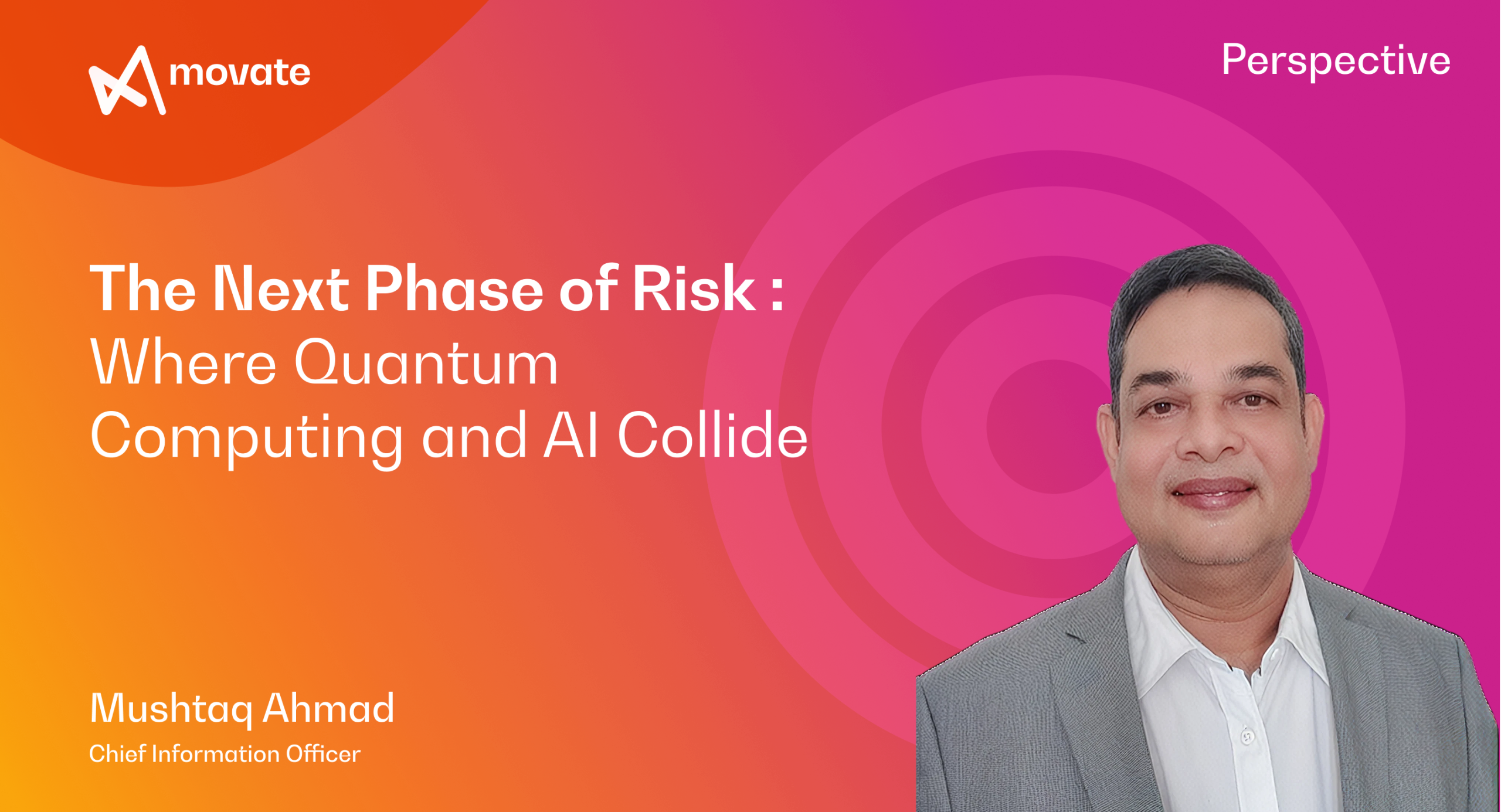
Mushtaq Ahmad brings more than two decades of IT industry experience and is the global Chief Information Officer at Movate. With expertise in data center technologies, next-generation cybersecurity, cloud, and applications he has assumed various leadership roles and worked across the globe in geographies like the USA, Europe, and APAC
As the CIO of Movate, he has set the organization’s technology strategy and roadmap, and has been driving the organization’s efficiency while creating a digitized ecosystem to elevate customer experience and service agility by collaborating with different stakeholders. Click to read complete profile.