
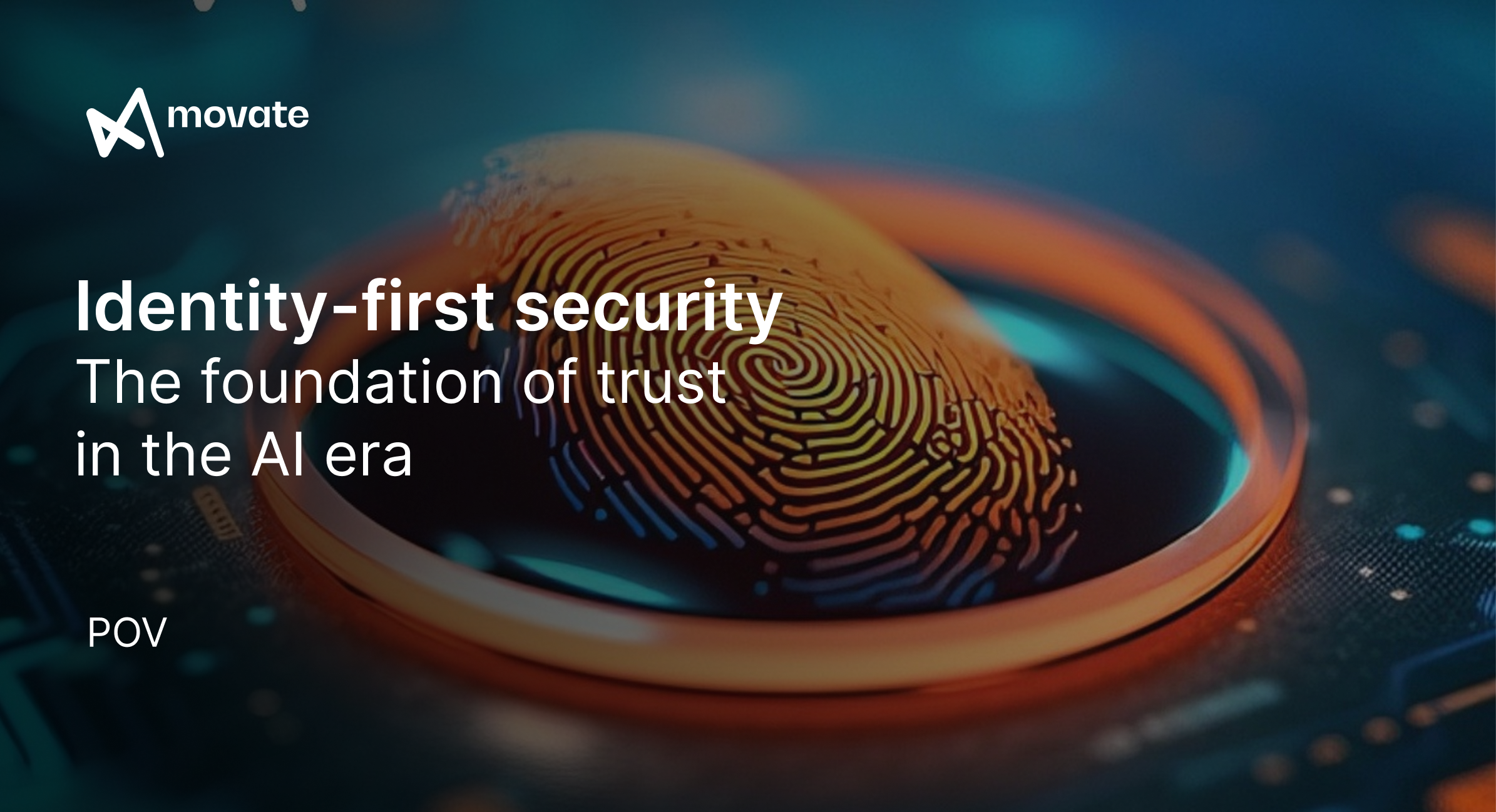
In today’s AI-driven enterprises, a single compromised service account can cascade into a full-blown data incident: an attacker hijacks a privileged identity, then leverages an unmonitored AI agent embedded in the environment to quietly exfiltrate customer records, payment logs, or operational data.
This isn’t a hypothetical war-game scenario; it mirrors real-world incidents where identity, not the firewall, turned out to be the first and last line of defense. In other words, as systems grow smarter and more interconnected, the weakest link is no longer infrastructure but who or what gets access to it. Identity-first security treats every entity, including employees, third-party vendors, boots, and AI agents, as an identity that must be continuously verified, strictly privileged, and clearly governed.
It replaces the old idea of a “trusted internal network” with a zero-trust reality: every access request is treated as potentially risky, and trust is granted only after continuous validation. In this context, identity-first security is not just a technical control layer; it is the operational foundation of trust for any organization that wants to harness AI without sacrificing security
Read the POV by Mushtaq Ahmad, CIO of Movate.