
For years, Salesforce has been the place where businesses manage customer relationships. Sales teams opened it to track opportunities. Service agents used it to resolve cases. Operations teams relied on it for workflows and customer data.
Headless 360 changes that model.
Salesforce is no longer asking employees, applications, or AI agents to come to Salesforce. Instead, its customer data, workflows, business rules, and AI capabilities can be brought directly into the applications, channels, and experiences where work is already happening.
For enterprises, that is a much bigger shift than a technology upgrade.
It changes how work gets done, how customers are served, and ultimately how quickly a business can respond to opportunity.
From a CRM System to Enterprise Business Infrastructure
Consider contacting a customer at the company’s service centre.
Instead of a service representative opening Salesforce, searching through customer records, checking an order system, finding relevant knowledge, and then deciding what to do next, an AI agent can access that business context and act in the background.
The customer simply gets a faster, more informed response.
That same principle can extend across sales, service, commerce, operations, and employee workflows. Salesforce describes Headless 360 as making its capabilities available to agents, applications, and experiences through APIs, MCP tools, and other interfaces.
The important enterprise question, however, isn’t how Salesforce is doing this. It’s what the business can do differently because of it.
What Changes for Enterprise?
1. Faster customer resolution
When customer information, business rules, and AI-driven recommendations can be accessed directly within a service workflow, employees spend less time searching across systems and more time resolving customer needs.
For a large contact centre, even small improvements in handling time, first-contact resolution, and agent productivity can translate into significant operational value.
This aligns closely with the broader move toward AI-augmented CX, where technology is no longer simply automating interactions but actively helping employees make better decisions in the moment.
2. More productive employees
Employees shouldn’t have to become experts in navigating five different enterprise systems just to complete one customer request.
Headless Salesforce enables businesses to bring CRM intelligence into the tools employees already use whether that is a contact-centre desktop, collaboration platform, internal application, or custom digital experience. The result is simpler employee experience and less time spent on administrative work.
3. Faster business response
Traditional enterprise technology often makes innovation expensive. A business wants to introduce a new customer journey or digital experience, but the underlying CRM, workflows, integrations, and data must be rebuilt around it.
Headless architecture changes that equation.
Businesses can reuse existing Salesforce data and business logic across new applications and experiences rather than rebuilding the foundation every time.That can help enterprises launch new experiences faster, respond to market changes sooner, and reduce the friction between business ideas and technology execution.
4. Better use of AI
This may be the biggest business implication.
AI agents are only as useful as the business context and actions they can access.
An agent that can understand a customer but cannot check an order, update a case, initiate a workflow, or follow enterprise policies remains limited. Headless 360 gives agents access to Salesforce’s underlying business capabilities while retaining enterprise controls around identity, permissions, compliance, and governance.
That moves AI from answering questions toward getting business work done.
The Bigger Enterprise Opportunity
The real opportunity isn’t simply to make Salesforce disappear from the browser.
It is to make customer intelligence and business processes available wherever the business needs them.
A bank could embed Salesforce-powered workflows into its own customer application. A retailer could connect customer context directly to an AI-powered service experience. A contact centre could use AI to retrieve customer information and execute actions during a conversation. A sales representative could receive recommendations without navigating through multiple CRM screens.
Salesforce becomes less of a destination and more of an invisible layer powering these experiences. And that matters because enterprise transformation is increasingly moving away from adding another application and toward connecting intelligence to the flow of work.
Where Movate Fits In
Headless 360 creates the foundation of technology, but the real enterprise value comes from how businesses apply it. Movate can help connect Salesforce’s intelligence with AI agents, customer experience, enterprise applications, and operational workflows, turning CRM capabilities into real business outcomes across sales, service, and customer operations. The opportunity isn’t simply to implement Headless 360, but to use it to make employees more productive, customers better served, and business processes faster and more intelligent.
From Technology Access to Business Impact
Headless 360 marks a fundamental shift in what a CRM can be. Salesforce is moving from being a system employees log into to becoming an intelligent layer that powers business processes wherever work happens.
For enterprises, the question is no longer “How do we get more people to use Salesforce?” but “How do we make Salesforce’s data, intelligence, and workflows work harder for the business?”
That is where the real value of headless CRM lies: not simply in removing the screen, but in removing the friction between customer needs, business intelligence, and action. It is about turning connected data and AI into faster decisions, better experiences, and measurable business outcomes.
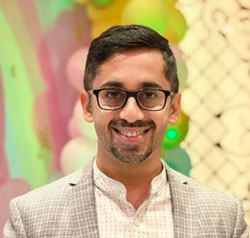
Rajesh Dhawan, is a Principal Salesforce Architect at Movate, specializing in Salesforce architecture, CRM solutions, integrations, and data migration. He focuses on designing scalable Salesforce solutions that address complex business needs and enable organizations to drive greater efficiency and value from their CRM ecosystem.