
Software teams today are not struggling with talent, but they are struggling with capacity. Highly skilled engineers, testers, and product owners spend a significant portion of their time on repetitive work instead of solving complex problems or delivering customer value. As digital products become more complex, scaling teams by simply adding more people introduces coordination challenges, knowledge gaps, and rising costs.
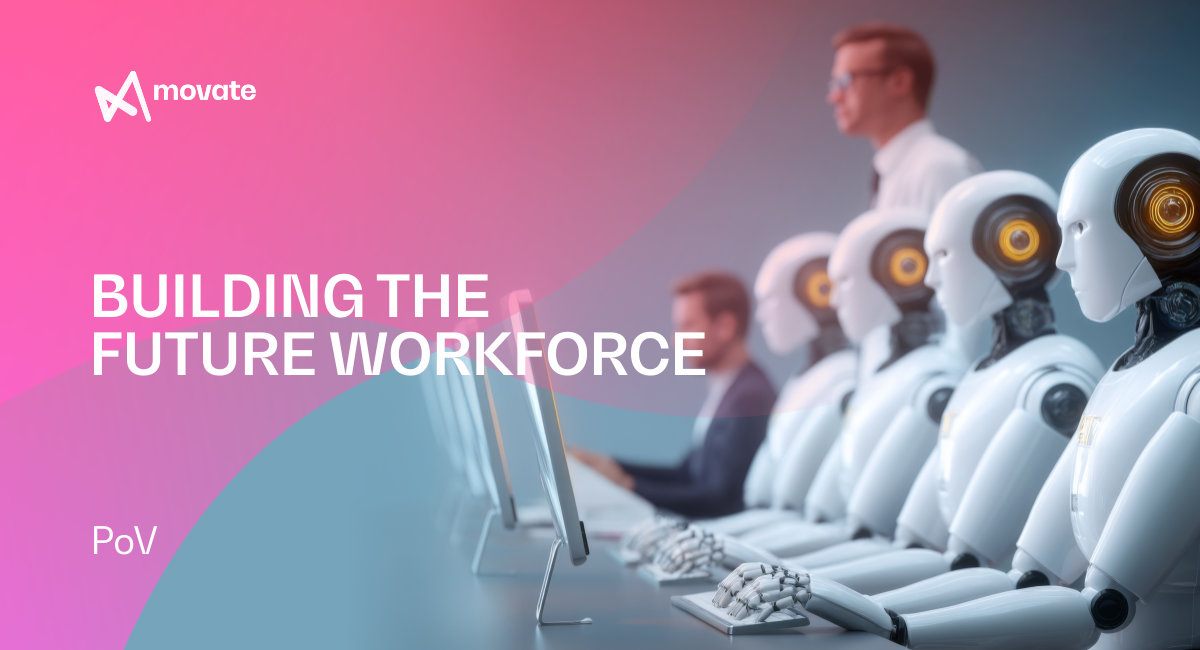
A new operating model is emerging to address this challenge: Human-as-Supervisor, AI-as-Workforce. AI agents (In this model) take care of predictable/repeatable work, while humans potential around judgment, creativity, and strategic decisions is amplified; instead of replacing teams, AI augments/enables their capacity. Time spent on writing boilerplate code by engineers is reduced; quality teams automate repetitive test creation, and the product owners concentrate on customer outcomes rather than mundane administrative tasks.
This Point of View (PoV) by Devanathan Desikan, AVP & AI Architect – Digital Services at Movate, delves into how organizations can operationalize this model by converging “digital twins, specialized task agents, knowledge agents, and orchestration frameworks” into agile delivery teams; these AI agents act as an extension of the team for generating artifacts, analyzing code changes, preserving institutional knowledge, and coordinating workflows. Human experts remain accountable for key decisions.