
For years, discussions about technology and work were framed as a zero-sum game, with fears that automation would replace people wholesale. Today, the conversation has shifted. Businesses are bringing humans and AI together to build a new kind of workforce—one where each complements the other. Humans contribute empathy, context, and creativity, while AI delivers scale, speed, and precision. This partnership is especially powerful in areas like customer experience, where people personalize and connect emotionally, and in IT, where seamless operations and risk management are essential. Rather than competing, humans and AI are redefining how work gets done.
Why 2025 Is a Turning Point for Human + AI Workforces
2025 has been an extraordinary year in terms of AI advancements and we are witnessing several key trends that strengthen the case for Human-AI collaboration. Forrester research shows that 75% of business leaders view AI primarily as a tool to augment employee capabilities rather than replace jobs. Primary shifts that are shaping the future of workforce:
- More evolved AI Models: The boom in “smart” AI with new Gen AI models being launched every couple of days. These models can now hold conversations, not just follow rules.
- Customer expectations: Customers today need quick, personalized, round-the-clock support.
- Increasing Complexity and Need for Speed: Complex IT structures and unanticipated cybersecurity challenges need quick reasoning and fast response.
- Need for Resilience: Amid geopolitical uncertainty, rising talent demands, and rapid social change, businesses are rethinking their models through digital-first approaches.
Customer Experience and IT Are Leading the Way in Human + AI Collaboration
The Human + AI partnership is evident in CX and IT. In CX, AI takes care of simple, routine tasks like tracking orders and resetting passwords, freeing people to support customers with tougher, more emotional needs.
In IT, AI watches systems non-stop, predicts problems, and spots security risks faster than humans can. The pandemic sped up this move to remote work and digital-first setups, showing how much this partnership can help.
According to McKinsey’s latest survey, nearly eight out of ten companies already use AI in some way, with IT at the forefront. And According to Gartner’s 2025 Hype Cycle for Data Center Infrastructure Technologies, Data Center Infrastructure Management (DCIM) tools, with 20–50% market penetration, are critical enablers for AI adoption in IT by optimizing infrastructure and enabling predictive maintenance and automation.
The Human + AI Continuum: Finding the Right Balance for Different Tasks
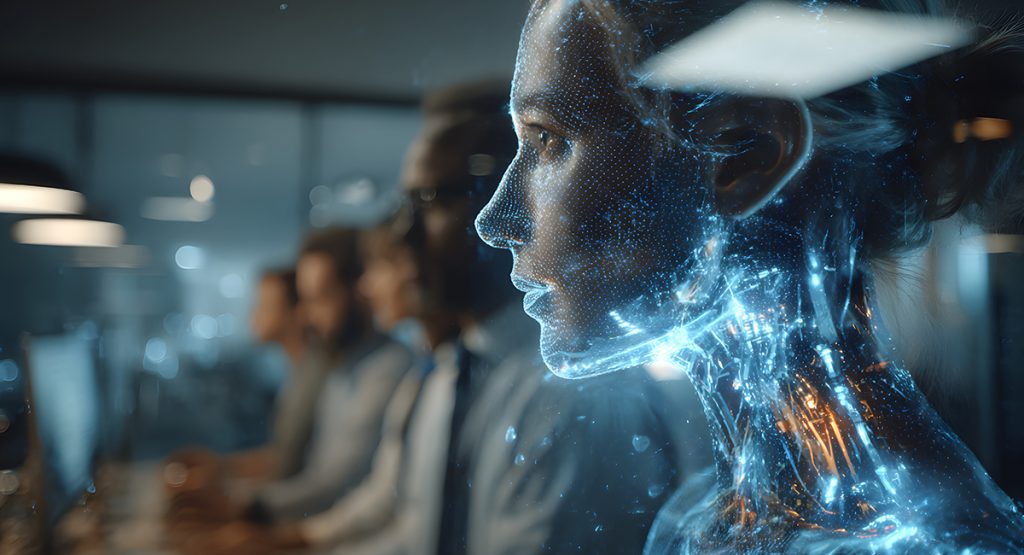
Think of the Human + AI Continuum like a sliding scale:
- Sometimes humans lead with AI helping them.
- Sometimes humans and AI share the work equally.
- Sometimes AI leads with humans overseeing results.
A CX agent might personally handle a customer complaint but let AI quickly reset a password. In IT, AI tracks system health all the time, but humans step in when there’s an alert or complex decision. Like cricket coaches using machines to train bowlers, AI supports people rather than replacing them.
How AI and People Work Together to Deliver Great Results
In CX, AI takes on the repetitive tasks that don’t need a human touch—like answering billing questions or resetting passwords—allowing customer service reps to spend more time with customers who need understanding or personalized solutions.Research shows most CX leaders see AI playing a key role in future customer service success.
- Anticipating Customer Issues: Amazon’s AI is so good it can often anticipate customer issues before they call. By leveraging advanced predictive analytics and machine learning, Amazon forecasts customer needs, optimizes inventory, and prepares solutions proactive to customer interactions, making the experience smooth and efficient.
- Redirecting to the right human-in-loop: Infosys’s AI routes incoming requests to the right human expert by using intelligent automation integrated with human expertise. Their AI-first customer experience approach ensures that simple queries are handled quickly by AI, while complex issues are escalated to specialized agents, improving resolution times and customer satisfaction.
- Automation of routine tasks: IndiGo Airlines deployed an AI-powered chatbot that handles millions of customer inquiries 24/7 across multiple platforms. The chatbot automates routine tasks like flight check-ins and booking modifications, freeing human agents to focus on more complex issues. This has increased customer satisfaction scores to 87%, with over 42 million messages processed in one quarter.
- GitHub Copilot at Microsoft: Microsoft developers widely use GitHub Copilot, an AI-powered code generation tool co-developed with OpenAI. It helps reduce time spent on writing repetitive code and accelerates onboarding for new developers. As a result, developers report higher productivity and less fatigue when working with unfamiliar code.
What Businesses Gain from a Balanced Human + AI Workforce
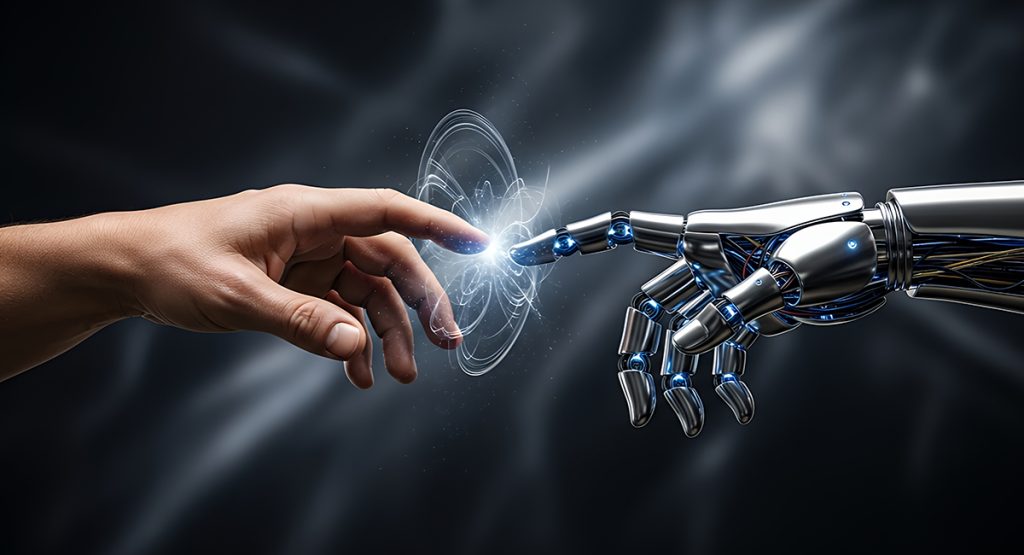
When companies bring humans and AI together, the benefits quickly become clear. IDC research consistently shows that enterprises leveraging AI report significant productivity gains and ROI, with AI-driven workforce augmentation becoming a critical competitive advantage. According to a study, 92% of surveyed AI users leverage it for productivity, and 43% report that productivity-related use cases deliver the highest ROI.
Faster fixes, less downtime, and round-the-clock service all become possible, without burning out employees. This balance allows teams to provide more personal, timely support while also strengthening IT security. For example,businesses can reduce customer wait times by combining AI efficiencies with staff trained to handle more complex issues. The result is not just speed, but smarter allocation of skills, where routine tasks are automated and people focus on higher-value work.
How Companies Can Navigate the Human + AI Collaboration Ahead
The organizations making progress are those that treat AI not as a replacement but as a partner. They invest in reskilling programs to help employees transition into emerging AI-driven roles, while also developing clear guidelines for ethical and responsible AI use. Transparency is critical. Companies that explain how AI systems work are better at building trust with both staff and customers. Many begin with small pilot projects to test use cases and refine workflows before scaling up to enterprise-wide adoption. This approach resembles a relay race, where humans and machines take turns carrying the baton to finish tasks more effectively together.
Looking ahead, workplaces will blend human insight, values, and creativity with AI’s ability to process data and deliver speed at scale. Just as electricity quietly powers our daily lives, AI will become an invisible but critical part of how businesses operate. Yet the human spark, empathy, judgment, and imagination will remain central to customer experience and IT innovation. Organizations that lean into this partnership, balancing automation with humanity, will be best prepared for whatever the future of work demands.
About the author

Bala Boddu serves as Associate Vice President at Movate, where he leads the ServiceNow practice and AI initiatives. With over two decades of experience across IT Service Management, IT Operations Management, CMDB, and enterprise applications such as HRSD and CSM, he has successfully driven large-scale digital transformations for global enterprises.
He brings deep technical expertise in Configuration Management and Common Service Data Models (CSDM), having led complex transformation programs and enterprise innovation initiatives. Boddu’s approach to growth is grounded in industry insight, strategic ecosystem partnerships, and a strong focus on delivering measurable customer value